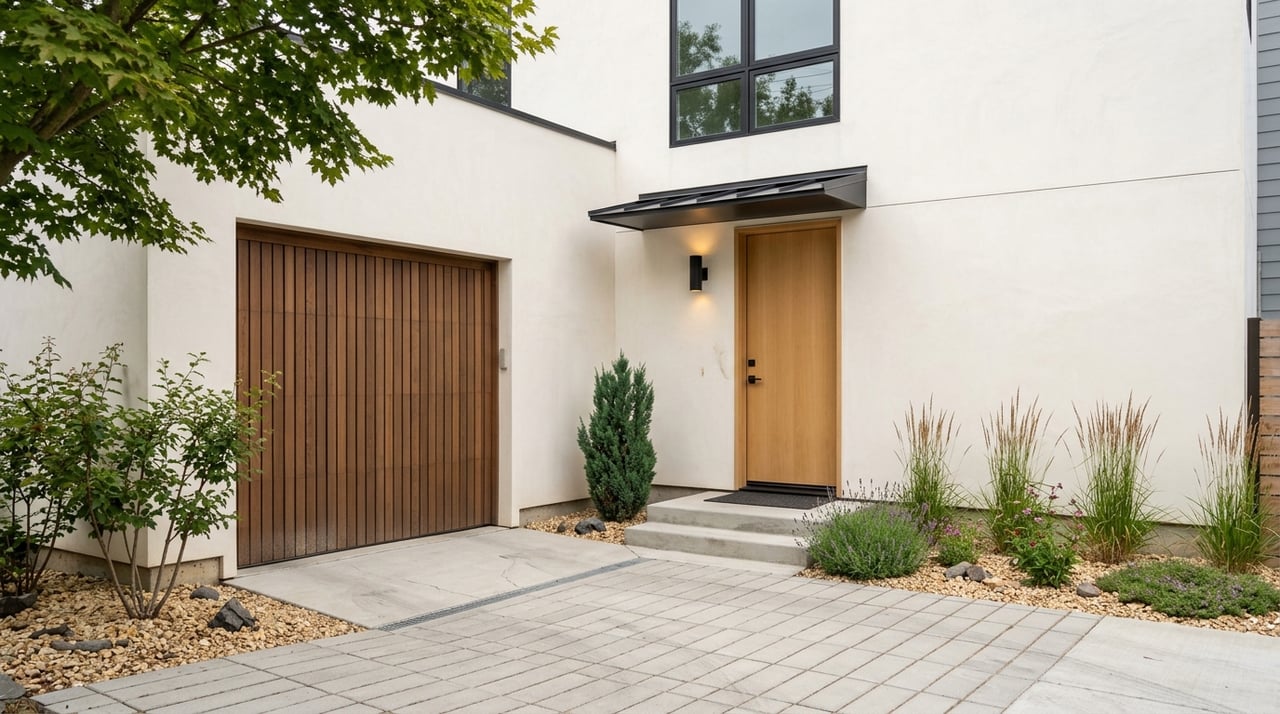
First Home Options Around Provo's Campuses And Beyond
July 2, 2026
July 2, 2026
If you are hoping to buy your first home in Provo, you have probably noticed one thing fast: your options can look very different from one area to the next. Near the city’s campus core, condos and townhomes often create the most realistic path into ownership, while farther out, the mix shifts toward larger detached homes at higher price points. This guide will help you compare those tradeoffs, understand where first-home options tend to show up, and narrow your search with more confidence. Let’s dive in.
Provo remains active and fairly tight for entry-level buyers. Zillow’s April 2026 snapshot showed a typical home value of $486,127, a median sale price of $470,891, and median days to pending of 23. Redfin’s rolling three-month snapshot ending April 2026 reported a median sale price of $488,000 and median days on market of 50.
Those numbers use different methods, but they point in the same direction. Well-priced homes can move quickly, and first-time buyers need a clear plan. Provo City has also publicly noted that the housing market has become especially challenging for young families and first-time buyers.
Another important piece of context is the city’s housing mix. Provo’s own housing infographic shows 42.1% owner occupancy and 57.9% renter occupancy. That helps explain why central and campus-adjacent areas often have more attached housing options than some buyers expect.
One of the biggest mistakes first-time buyers can make is treating Provo like one uniform market. It is better to think of the city as a collection of distinct submarkets, each with a different balance of price, home type, parking, and lifestyle convenience.
If you want to stay close to BYU or enjoy easy access to downtown, you will likely spend more time looking at central neighborhoods and attached homes. If you want more space and a more traditional detached-home search, you may end up comparing areas beyond the core. That does not make one option better than another. It simply means your best fit depends on what matters most to you.
Provo’s Central District includes University, Dixon, Timp, Franklin, Franklin South, Downtown, Joaquin, Maeser, and East Bay. These are the areas most likely to come up when buyers want to stay near BYU, downtown amenities, or central city access.
BYU’s home base is in Provo, while UVU’s main campus is in nearby Orem. For some first-time buyers, that means the search naturally expands beyond central Provo if they want to compare commute patterns, price points, or housing types across both areas.
The city describes Timp as the most walkable neighborhood in Provo and a residential oasis near downtown. It is also known for historic homes and close access to restaurants, retail, parks, recreation, and other daily conveniences.
For a first-time buyer, Timp can be appealing if you value being near the middle of things. At the same time, historic housing and central location often mean you need to look carefully at price, condition, parking, and lot size.
The city’s Downtown Master Plan describes downtown as the commercial, civic, and cultural center of Provo and Utah County. It also includes a mix of residential properties alongside commercial uses.
That mixed-use setting can work well if you want a more urban feel and a car-light lifestyle. It can also mean that home style, parking access, and building type vary a lot from one property to the next.
The Maeser Neighborhood Plan places Maeser south of Center Street, east of University Avenue, west of 900 East, and north of 600 South. The city describes it as a Pioneer neighborhood with an early grid layout.
For buyers, Maeser often enters the conversation when you want central access but a more established residential setting. It is another example of why looking at block-by-block differences in central Provo matters.
Joaquin, Franklin, Dixon, University, Franklin South, and East Bay are also part of the city’s Central District. If your goal is proximity to campus or central Provo activity, these areas belong on your comparison list.
The key is not to assume they all feel the same. Even within the core, home types, street patterns, parking setup, and pricing can shift quickly.
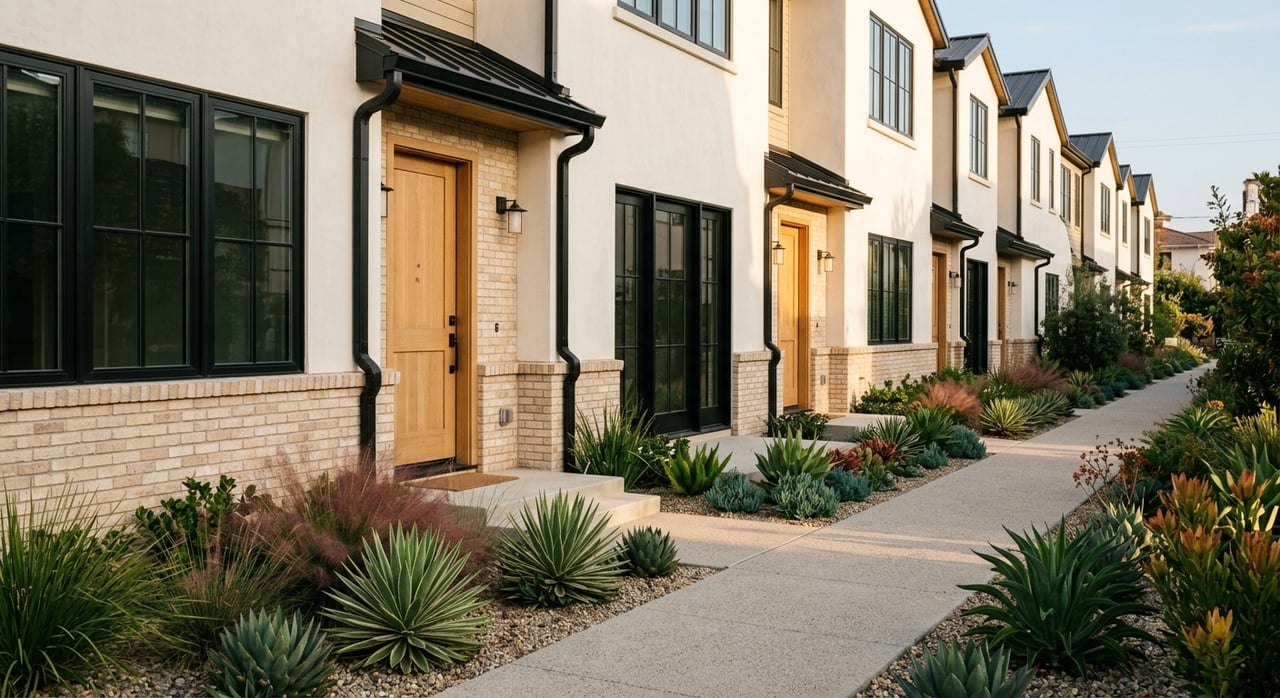
For many first-time buyers, attached housing is the practical entry point around Provo’s campuses and central neighborhoods. Current listing snapshots support that. Zillow’s 84601 condo page showed 16 condo listings at the time captured, with examples from about $189,900 to $309,000.
Zillow’s citywide townhome page showed 32 townhome listings, with examples from about $194,999 to $509,000. Redfin also reported that, in addition to houses, Provo had 73 condos, 52 townhouses, and 34 multi-family units for sale last month.
That mix matters because it gives you more ways to enter the market. If a detached home feels out of reach in your preferred area, a condo or townhome may offer a path to ownership while keeping you closer to campus, downtown, or major daily routes.
Neighborhood value tiers in Provo vary sharply. Zillow’s neighborhood estimates near Timp ranged from the low $300,000s in Franklin South at $338,231 and Rivergrove at $354,575, to mid-range central areas like Central Business District at $375,658, Franklin at $386,136, Dixon at $398,871, Joaquin at $407,700, and Maeser at $443,364.
From there, values climb into higher tiers. Lakeview South was listed at $476,550 and Sunset at $507,371. Higher-priced foothill or view-oriented neighborhoods included North Timpview at $668,298, Indian Hills at $754,217, Riverbottoms at $769,927, and Sherwood Hills at $915,729.
These are home-value estimates, not asking prices, but they are still useful for setting expectations. In general, smaller attached homes tend to be the more realistic first-home option in central Provo, while detached homes in established or foothill neighborhoods often move into a higher price range.
If you are open to living a little farther from the central campus area, Provo offers other residential districts worth comparing. The city’s North District includes North Timpview, Riverbottoms, Sherwood Hills, Riverside, Edgemont, Indian Hills, Rock Canyon, and Pleasant View.
The West District includes Lakeview North, Lakeview South, Fort Utah, Provo Bay, Sunset, and Lakewood. These areas can appeal to buyers who want a different balance of space, neighborhood layout, and distance from the busiest central areas.
In many cases, looking beyond the core is not about giving something up. It is about choosing a different set of priorities, such as more room, less campus traffic, or a different price-to-space equation.
Near campus and downtown, parking should never be treated as an afterthought. Provo says downtown has more than 10,000 parking spaces, but garages are recommended for stays longer than two hours. The city also has residential parking permit areas, and restrictions vary by district.
For a buyer, that means you should check parking at the property level. Do not assume that a condo, townhome, or house will have the parking setup you need just because it is in a certain ZIP code or neighborhood.
Transit and biking are also part of the equation. Provo says certain BYU and UVU ID cards act as transit passes for free UTA access, and the city identifies itself as a Gold-Level Bicycle Friendly Community with a large trail network and more than 100 trails.
If you like the idea of walking, biking, or relying less on a car, central Provo may offer real advantages. If you need more consistent private parking or prefer a quieter street pattern, outer neighborhoods may be a better fit.
Zoning is one of the most overlooked parts of a first-home purchase. Provo’s code-compliance page tells buyers to obtain correct zoning information before occupying or taking ownership of a property.
This is especially important in central neighborhoods, where property use, parking rules, and future flexibility may differ from what you expect. The city also notes that some single-family homes in residential zones with an ADU overlay can be approved for an accessory dwelling unit if requirements are met, with parking governed by city code.
You do not need to become a zoning expert on your own. You just need to make sure the property fits how you plan to use it now and what flexibility you may want later.
If you feel torn between campus convenience and more space, start by ranking your top priorities. This helps you focus on homes that fit your real life, not just your initial wish list.
Ask yourself:
That kind of clarity makes the search less stressful. It also helps you act faster when the right home appears.
In Provo, your first home may not look exactly like your long-term home. That is normal. In a market where prices vary sharply by location and housing type, the best first purchase is often the one that balances budget, daily convenience, and future flexibility.
For some buyers, that means a centrally located condo with easier access to downtown or campus. For others, it means expanding the search to a townhome or a neighborhood beyond the core. The goal is not perfection on day one. The goal is a smart, sustainable first step into ownership.
Buying your first place in Provo takes more than scrolling listings. It takes a strategy that matches your budget, commute, parking needs, and comfort level with different neighborhoods. If you want a calm, informed guide as you compare condos, townhomes, and houses across Provo, connect with Naomi McClure for thoughtful local guidance and a clear plan.
Stay up to date on the latest real estate trends.
Experience a real estate partnership built on trust, expertise, and genuine care. Naomi brings a lifelong understanding of what “home” truly means to every client and every decision.